Your shopping cart
😊 Product added to cart successfully
Product removed to cart successfully

Alright, let's have an honest conversation.
Walk into any pharmacy right now, and you'll find an entire wall dedicated to serums. Some promise to erase dark spots in seven days. Others claim to reverse five years of ageing in a single bottle. And somewhere on a shelf near the checkout counter, there's probably one telling you that your skin will be "transformed."
I've been there. Most of us have. I remember saving up for a vitamin C serum after watching a before-and-after video that genuinely looked like two different people. Used it faithfully for two weeks. Woke up every morning and held my phone up to my face under the window light hoping to see a miracle. What I got instead was... slightly more hydrated skin and a lesson in managing expectations.
That lesson turned into something useful though. Because once you stop chasing the fantasy version of what a serum can do, you can actually start using it in a way that makes a real, visible difference.
So that's what this blog is about. The truth. Not the IG version, not the marketing version. The real, research-backed, no-nonsense version of what a serum can and cannot do for your skin.
A serum is a skincare product designed to deliver a high concentration of active ingredients directly into the skin. That's the simple version. The more interesting part is how it does that.
Compared to your regular moisturiser, a serum has a much smaller molecular structure. That means its ingredients can travel deeper into the skin layers rather than just sitting on the surface. This is what makes serums the "heavy hitters" of any skincare routine. They're not there to protect or seal. They're there to treat.
But here's what the shelves won't tell you: the word "serum" is a broad category, not a specific product type. A vitamin C serum, a retinol serum, and a hyaluronic acid serum are three completely different tools. They target different problems. They work through different mechanisms. And they're suited to different skin types and concerns.
Buying a serum without knowing what problem you're solving is like buying medicine without knowing what you have. It might work. But probably not as well as it could.
This is one of the most searched skincare questions online, and for good reason. Both products go on your face. Both claim to make your skin better. So what actually separates them?
A moisturiser's job is barrier function. It sits on the outer layer of your skin, traps in hydration, and protects you from environmental irritants. Think of it as a shield.
A serum's job is delivery. It takes targeted ingredients (antioxidants, peptides, acids, vitamins) and pushes them into the skin where they can actually interact with cells and make change happen.
One protects. The other treats. Skipping either one leaves your routine incomplete.
A common mistake, especially for people new to skincare, is applying a serum after moisturiser. That effectively blocks the serum's absorption. Serum always goes on first, on clean skin, with moisturiser layered on top to seal everything in.
Here's where the honest excitement begins.
The active ingredients in well-formulated serums are not just marketing buzzwords. Many of them have decades of peer-reviewed clinical research behind them. Vitamin C's role as a topical antioxidant and collagen synthesis supporter is well established in dermatological literature. Retinoids (the broader family that includes retinol) are among the most studied anti-ageing ingredients in existence. Hyaluronic acid's ability to attract and hold water in the skin is measurable, repeatable, and genuinely impressive.
Research consistently shows that retinol used topically over 12 weeks can significantly reduce the appearance of fine lines and improve skin texture by accelerating cell turnover. Studies on vitamin C serums show measurable improvements in skin brightness and a reduction in hyperpigmentation with consistent use over 8 to 12 weeks.
These aren't small changes. They're real. They're just not instant.
Your skin renews itself roughly every 28 days. That cycle slows down as you age. What that means practically is that any ingredient working to improve your skin has to wait for that turnover process to show its effects on the surface.
When a serum says "visible in 7 days," it's usually measuring something like surface hydration or a small reduction in redness. Not the bigger picture improvements like evening out tone or reducing fine lines. Those take months.
Most dermatologists recommend giving any active serum a minimum of 8 to 12 weeks before deciding whether it's working. That's not a long time in the grand scheme of things. But it does require patience, and most people quit before they get there.
Not all serum ingredients deserve equal attention. Some are backed by decades of evidence. Others are trending because they photograph well in flat-lays. Here is a clear-eyed look at the ones that genuinely deliver results.
Vitamin C (specifically L-ascorbic acid in its active form) is one of the most clinically validated skincare ingredients available without a prescription. It neutralises free radicals from UV exposure and pollution, which are two of the main drivers of premature skin ageing.
Beyond protection, it actively works to inhibit melanin production, which is why it's so effective against dark spots and uneven skin tone. It also plays a direct role in collagen synthesis, meaning it supports the structural protein that keeps skin firm.
The effective concentration range for visible results is generally between 10 and 20 per cent. Below that, you're unlikely to see much impact. Above 20 percent, irritation becomes a real concern for most skin types. If you have sensitive skin, look for more stable vitamin C derivatives like ascorbyl glucoside or sodium ascorbyl phosphate. They're gentler and still effective.
Vitamin C degrades quickly when exposed to light and air. A good formulation comes in dark or opaque airtight packaging. If your vitamin C serum has turned orange or brown, it's oxidised and much less effective.
Hyaluronic acid is already present in your body naturally. It's a sugar molecule that draws water in and holds it there. The problem is that its natural production in the skin declines with age, stress, and environmental factors.
A hyaluronic acid serum can attract up to 1,000 times its molecular weight in water, which is genuinely remarkable chemistry. When used on slightly damp skin (a common recommendation), it draws moisture from the air and deeper skin layers and holds it in the upper layers.
The result, within days rather than weeks, is plumper, softer, and more cushioned-looking skin. Fine lines caused by dehydration visibly diminish. Skin feels more comfortable and less tight.
The best formulas contain multiple molecular weights of hyaluronic acid, targeting hydration at different skin depths simultaneously. This layered hydration approach outperforms single-weight formulas significantly.
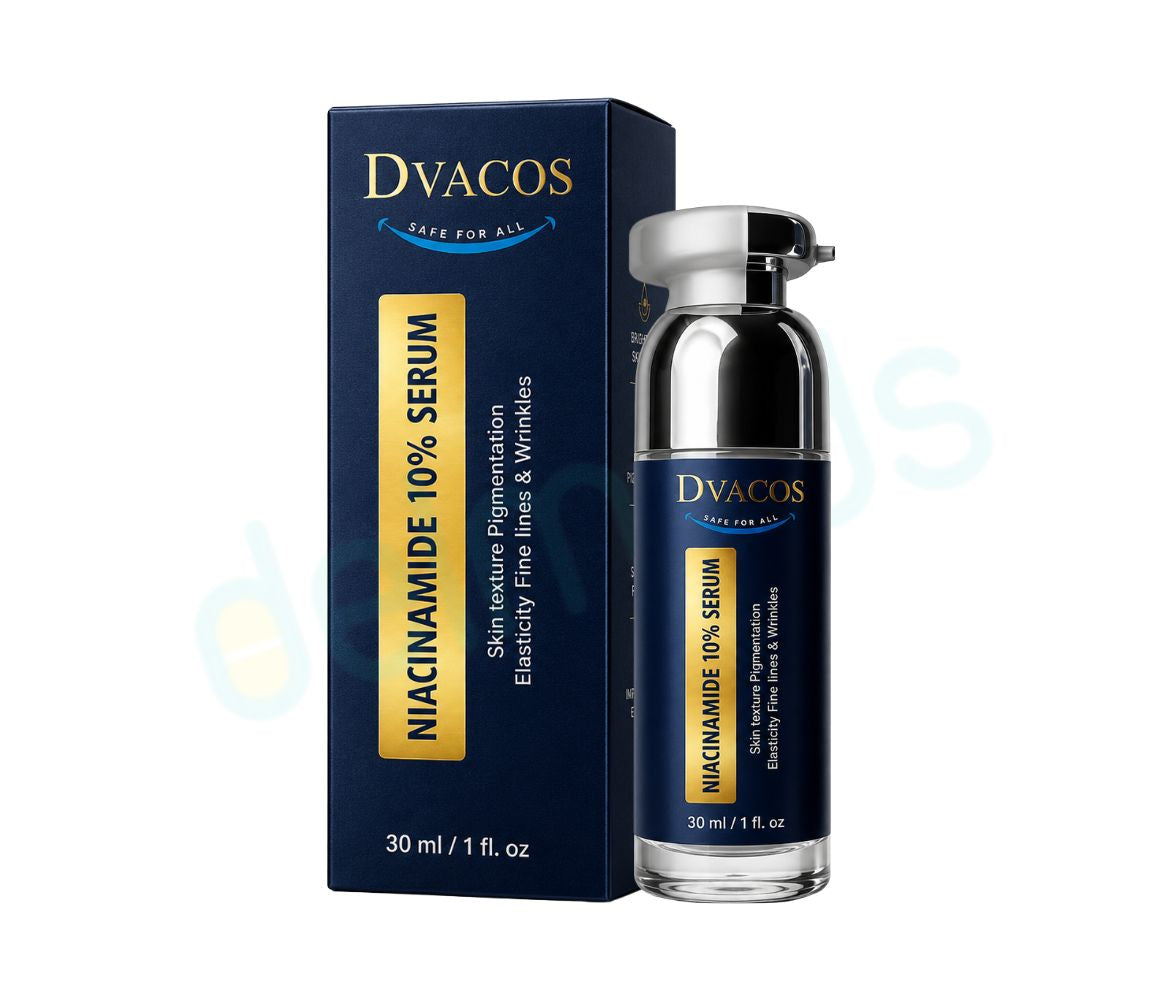
Niacinamide (Vitamin B3) is having its moment in skincare, and it's earned it. It's one of the gentlest active ingredients available, which makes it suitable for almost every skin type, including sensitive and acne-prone.
What it does is impressive given how mild it is. It regulates sebum production, which helps oily and combination skin feel less greasy and reduces the appearance of pores. It also fades post-inflammatory hyperpigmentation (the dark marks left after breakouts), strengthens the skin barrier, and has anti-inflammatory properties.
Crucially, niacinamide is compatible with nearly every other skincare ingredient. You can layer it with vitamin C, retinol, hyaluronic acid, or AHAs without worrying about irritation or ingredient conflicts. That makes it an excellent entry point for anyone just starting to build a serum routine.
Retinol is a vitamin A derivative and it's been the gold standard in anti-aging skincare for decades. The reason for its reputation is simple: the evidence base is enormous and consistent.
Retinol works by binding to receptors in skin cells and signalling them to increase cell turnover and collagen production. Over time, this resurfaces the skin, smooths texture, reduces fine lines, and evens out tone.
The trade-off is the adjustment period. New retinol users almost always experience some dryness, peeling, and sensitivity in the first four to six weeks. This is normal and temporary. Starting with a low concentration (0.025 to 0.1 percent) used two to three nights per week is the smart approach. Frequency and concentration can be gradually increased as your skin builds tolerance.
Retinol must be used at night. It degrades in sunlight, and it makes skin more photosensitive. Sunscreen the following morning is not optional. It's essential.
This is the part of the conversation that tends to get skipped. And it matters a lot.
The most common reason serums "don't work" is that people stop using them too early. Twelve days is not long enough to judge a retinol serum. Three weeks is not long enough to decide a vitamin C serum isn't brightening your skin. Skin changes slowly. The visible results you're looking for are happening below the surface for weeks before they show up where you can see them.
The second most common reason is product-to-skin mismatch. A heavy, oil-rich serum on acne-prone skin can worsen breakouts. A strong acid serum used without proper moisturising can strip the skin barrier and cause redness and flaking. Knowing what your skin actually needs, rather than what a marketing campaign tells you everyone needs, is fundamental.
The third reason is incorrect application. Serum applied after moisturiser can't penetrate properly. Serum rubbed vigorously into the skin instead of gently pressed can cause irritation. Using too much product doesn't accelerate results; it often just irritates.
And the fourth reason, which doesn't get talked about nearly enough, is not using SPF. Most active serums increase photosensitivity. If you're using vitamin C or retinol and skipping sunscreen, you're actively working against the serum's benefits. Sun damage accumulates daily. A serum can't outwork unprotected skin.
The global skincare market is worth hundreds of billions of dollars. That's a lot of incentive to make every product sound essential and every result sound guaranteed.
The phrase "clinically proven" on a serum label sounds impressive. But it often means the brand conducted its own in-house study with a small group of participants, not a peer-reviewed clinical trial published in a medical journal. "Dermatologist tested" can mean a dermatologist simply looked at the formula and gave a general approval, not that the product was rigorously assessed for efficacy.
None of this means the product doesn't work. It might work very well. But learning to read ingredient lists rather than packaging claims is the single most useful skill you can develop as a skincare consumer.
Specifically: look at where the active ingredient appears in the ingredient list. Ingredients are listed in descending order of concentration. If the vitamin C is listed near the bottom of a long ingredient list, it's present in a very small amount, likely too small to produce results. Effective concentrations are in the top half of the list.
Also be cautious of formulas that combine too many active ingredients. More isn't better. A focused serum with one or two well-dosed actives outperforms a product that lists twelve "transformative" ingredients in small amounts.
If you're starting from scratch, simplicity is your friend. One well-chosen serum, used consistently and correctly, will outperform a cabinet full of products cycled impatiently.
Start by identifying your primary skin concern. Dullness, dark spots, dehydration, fine lines, breakouts, and uneven texture each point to different ingredients. Pick the ingredient that matches your concern. Purchase a product where that ingredient appears in an effective concentration. Introduce it slowly, especially if it's retinol or a high-concentration vitamin C.
The correct routine order is: cleanser, toner if you use one, serum, moisturiser, and SPF in the morning. At night: cleanser, serum, moisturiser.
Apply serum to slightly damp skin. Use a few drops. Press gently with your fingertips rather than rubbing. Let it absorb for 30 to 60 seconds before applying moisturiser.
Give it twelve weeks. Take a photo before you start so you have a real comparison. And remember that the goal isn't perfection. The goal is healthier, more even, better-functioning skin over time.
No, and this is a misunderstanding worth clearing up properly. Serums and moisturisers do fundamentally different jobs. A serum delivers concentrated active ingredients to targeted skin concerns, working at a cellular level to create change. A moisturiser forms a protective barrier on the skin's surface, sealing in hydration and protecting against environmental stressors like wind, pollution, and temperature changes.
If you skip your moisturiser while using an active serum, especially one containing vitamin C, retinol, or an acid, you're likely to end up with skin that feels dry, tight, or irritated. The serum does the treating. The moisturiser does the protecting. Skipping either one leaves your skin incomplete. Even oily skin types need a lightweight moisturiser. The goal is barrier integrity, and a serum alone doesn't provide that.
The honest answer depends entirely on the ingredient and what you're trying to address. Hyaluronic acid serums can produce visible plumping and softness within a few days because they work on the skin's surface hydration level, which is relatively easy to change quickly. Vitamin C serums typically take four to eight weeks to produce a noticeable brightening effect because they're working to slow melanin production and even out tone over multiple skin cycles.
Retinol is the one that requires the most patience. Twelve weeks is the baseline, and three to six months of consistent use is when the most significant anti-aging changes become visible. Your skin renews itself roughly every 28 days, and that cycle slows with age. Any serum working to improve your skin has to wait for that renewal cycle to show results at the surface.
For most serums, consistent daily use is exactly what produces results. Vitamin C and hyaluronic acid serums are suitable for twice-daily use for most people. Niacinamide can also be used morning and evening without issue for most skin types.
Retinol is the exception. If you're new to retinol, starting two to three times per week is the accepted approach. Using it every night before your skin has built up tolerance can cause significant dryness, peeling, and inflammation. As your skin adapts over several weeks, frequency can be gradually increased. The overall rule is: read the product instructions and pay close attention to how your skin responds. Consistency matters, but so does listening to your skin.
Serum goes on after cleansing and toning but always before moisturiser. The reason is straightforward. Serums are designed to penetrate the skin and deliver active ingredients to where they're needed. Applying them over a moisturiser blocks that penetration and significantly reduces efficacy.
If you're using more than one serum, apply the thinner, more watery formula first. Thicker serums go on second. Sunscreen, if you're doing a morning routine, is always the final step and nothing goes on top of it. This sequence isn't arbitrary. It follows the logic of thinnest to thickest, and it ensures each product can absorb properly before the next layer is applied.
Yes, but the key is knowing which ingredients work well together and which ones conflict. Niacinamide and hyaluronic acid are an excellent pairing, covering both hydration and skin barrier support without any irritation risk. Vitamin C and niacinamide used together is another widely accepted combination.
Where things get complicated is combining vitamin C and retinol. Both are highly active ingredients and using them at the same time can overwhelm the skin and cause redness, peeling, and irritation for most people. The standard recommendation is to use vitamin C in the morning (where its antioxidant properties are most useful against daytime UV and pollution exposure) and retinol at night. This way you get the benefits of both without the risk of combining them on skin simultaneously. Always introduce new serums one at a time so you can identify what your skin likes.
Vitamin C serums are widely regarded as the most effective option for improving overall skin radiance and achieving a brighter, more even complexion. They address two of the main causes of dull skin: free radical damage and uneven melanin distribution. Used consistently in the morning under sunscreen, a well-formulated vitamin C serum can visibly brighten skin tone within six to eight weeks.
For people who find vitamin C irritating, niacinamide is a gentle alternative with solid brightening evidence behind it. And for that deep, lit-from-within glow, a combination serum pairing vitamin C with hyaluronic acid addresses both radiance and hydration simultaneously, which tends to produce the most visible and photogenic skin improvement for most people.
Yes, and it's more common than people realise. The cause is almost always one of two things: the wrong product for your skin type, or the right product used incorrectly.
Heavy oil-based serums on acne-prone or oily skin can clog pores and trigger breakouts. High-concentration acid serums used too frequently or without adequate moisturising can compromise the skin barrier, leading to redness, peeling, and increased sensitivity. Retinol used too aggressively too quickly causes what's called "retinol purging," where congested skin temporarily gets worse before it gets better.
None of this means the serum itself is bad. It usually means the formulation isn't a good match for your skin, or that your routine needs adjustment. Patch testing any new serum on a small area of skin before applying it all over your face is a simple step that can save you significant irritation.
Both are lightweight, water-based products applied before moisturiser, but they serve different purposes. An essence is typically more diluted and primarily focused on hydration and preparing the skin to absorb subsequent products more effectively. It's a common step in Korean skincare routines and often contains ingredients like fermented extracts or centella asiatica.
A serum is more concentrated and more targeted. It's built around specific active ingredients designed to address specific concerns: brightening, anti-aging, acne control, or hydration. If you use both, essence goes before serum. If you're keeping your routine simple, a serum does more of the active work and an essence, while beneficial, is optional. Most Western skincare routines skip the essence entirely without losing effectiveness.
Vitamin C is one of the more universally beneficial skincare ingredients, but it's not entirely without nuance. The most potent and bioavailable form, L-ascorbic acid, can cause stinging, redness, and irritation at high concentrations, particularly on sensitive or reactive skin. If you have rosacea or a compromised skin barrier, jumping straight to a 20 percent vitamin C formula is likely to cause discomfort.
The practical solution is to start with a lower concentration, around 10 percent, or to choose a more stable vitamin C derivative like ascorbyl glucoside or magnesium ascorbyl phosphate. These are gentler on the skin while still delivering brightening and antioxidant benefits, though they may work slightly more slowly. For any skin type, patch testing before full-face application is always a smart first step with any new active.
The answer depends on which serum you're using, and this is one case where following the recommendation actually matters.
Vitamin C serums belong in the morning. They provide antioxidant protection against daytime UV exposure and environmental pollution, and that protective function is most useful during the hours when your skin is actually being exposed to those stressors.
Retinol serums belong at night. Retinol is degraded by sunlight, making it significantly less effective when used in the morning. It also increases photosensitivity, so using it at night and applying SPF the following morning is the correct approach.
Hyaluronic acid and niacinamide are flexible. They can be used morning, evening, or both depending on your routine. If you're uncertain, the product instructions will always specify the intended use. The most important factor overall is consistency: using a serum at the same time each day builds a routine that sticks.
Here's the honest version of the story the beauty industry doesn't lead with.
"Transformation" is a high-voltage marketing word. It implies dramatic, before-and-after photo-worthy change in a short timeframe. And that expectation is where most people's disappointment with serums comes from.
Real skin improvement is slow. It's cumulative. It often doesn't feel like it's happening at all, until someone who hasn't seen you in three months says "your skin looks really good lately." That's what consistent serum use actually delivers. Not a dramatic reveal in fourteen days. A gradual, genuine improvement in texture, tone, hydration, and overall skin health over months of use.
I've seen this in my own routine. After three months of a consistent vitamin C serum in the morning paired with retinol twice a week at night, the change was real. My skin tone was more even. The persistent dullness I'd had for years was noticeably reduced. But at week two? Nothing. At week four? Maybe slightly better. The visible results came at week ten onwards, and they built from there.
The products that promise transformation in seven days are asking you to evaluate results at the wrong time. It's like planting a seed, checking the soil every morning for a week, and concluding that gardening doesn't work.
So, can one serum really transform your skin?
Yes, with an honest definition of "transform." The right serum, matched to your actual skin concern, used correctly, consistently, and paired with sunscreen and basic skincare hygiene, can create a visible, measurable, and lasting improvement in your skin over the course of months.
But no serum can replicate good sleep, adequate water intake, a balanced diet, or rigorous sun protection. It's a tool. A genuinely powerful one when used right. But it's one part of a bigger picture.
The hype gets serum's potential right but its timeline completely wrong. The science is legitimate. The ingredient research is solid. The marketing around it just compresses reality into a promise that most products, through no fault of their own, can't deliver in the window being implied.
Learn to read ingredient lists. Match your serum to your skin concern. Use it consistently. Give it time. Protect it with SPF. And then let the results speak for themselves, because when used correctly, they do.
What you need to know before you close this tab:
Serums are concentrated skincare products with small molecular structures that deliver active ingredients deeper into the skin than a moisturiser can reach. They treat. Moisturisers protect. You need both.
The most clinically supported ingredients are vitamin C (brightening and antioxidant protection), hyaluronic acid (deep hydration), niacinamide (barrier support, pore appearance, and oil regulation), and retinol (anti-aging and cell turnover).
Results take time. Hydration improvements can show within days. Brightening takes four to eight weeks. Anti-aging changes take twelve weeks or more. Quitting early is the most common reason serums get a bad reputation.
Most people don't see results because they switch products too soon, use the wrong formula for their skin type, apply serums in the wrong order, or skip SPF entirely.
The correct routine order is cleanser, toner (optional), serum, moisturiser, and SPF in the morning.
Ignore packaging claims. Read the ingredient list. Look for your active ingredient in the top half of the list. Concentrate on one or two well-dosed actives rather than a formula with twelve thin ones.
One well-chosen serum, used correctly and consistently for three months, is enough to see real results. You don't need a full shelf. You need the right one.
DISCLAIMER : This website provides general information for educational purposes only and should not be considered a substitute for professional medical advice, diagnosis, or treatment. Always seek the guidance of a qualified healthcare professional with any questions you may have regarding a medical condition. Do not disregard professional medical advice or delay seeking it because of information you've read on this website. Your health is important – when in doubt, consult a doctor.