
Your shopping cart
😊 Product added to cart successfully
Product removed to cart successfully


Use DERMA120 to get ₹120 off on Order ₹2999+
Use DERMA50 to get ₹50 off on Order ₹1999+
Couldn't load pickup availability

India
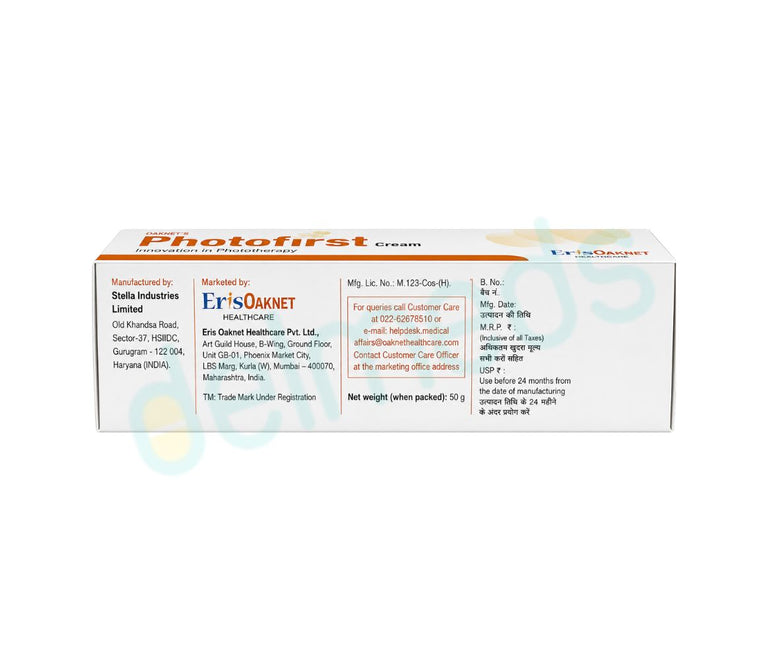
stella Industries LLP 11nd Floor, old Khandsa road, sector 37,
HSIIDC, Kherki Daula, Gurugram
Haryana- 122004, INDIA
India
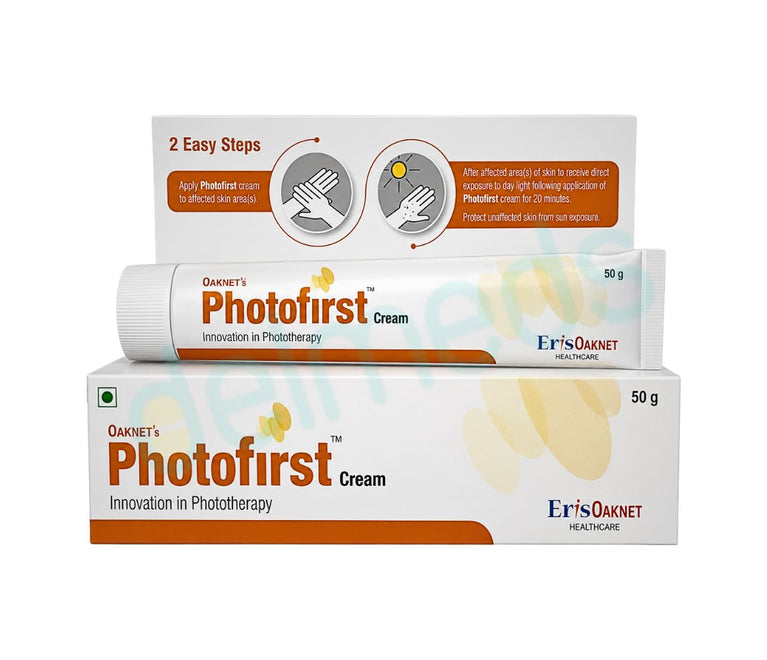
Photofirst Cream is used as part of a guided phototherapy-support routine where the cream is applied on targeted skin areas before limited daylight exposure. It is made for people who have been advised to use a daylight-based skin routine under professional guidance.
Photofirst Cream should be used by people who have been specifically advised by a dermatologist or qualified healthcare professional. It is not a regular face cream or daily sunscreen, so it should not be used casually without understanding the correct application method and sun exposure timing.
Photofirst Cream is designed to support controlled light exposure on targeted skin areas. After application, the selected area is exposed to daylight for a short, guided duration, while the surrounding unaffected skin should be protected from sunlight.
Photofirst Cream helps support a structured daylight-based skincare routine for affected areas. It may help maintain skin comfort, support a more even-looking skin appearance, and make the routine easier to follow when used exactly as advised.
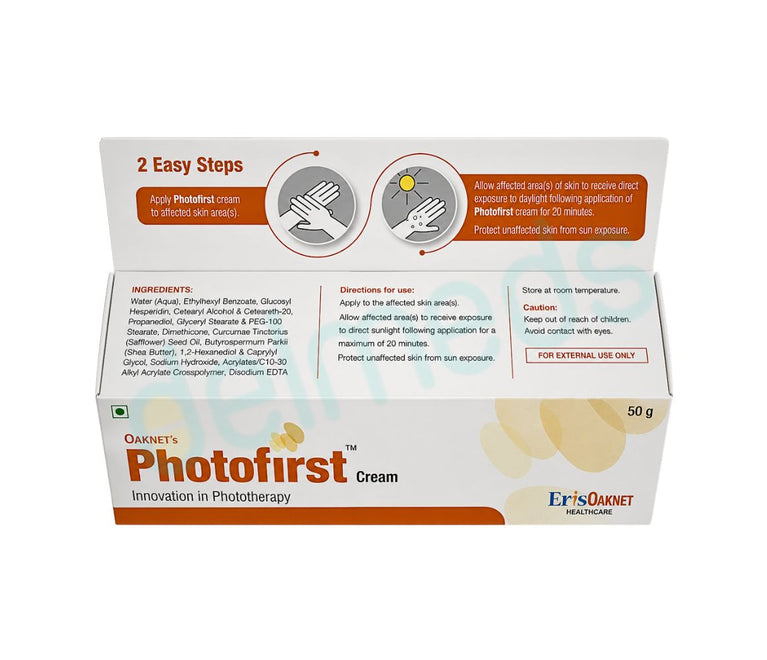
Photofirst Cream contains ingredients such as Glucosyl Hesperidin, Ethylhexyl Benzoate, Safflower Seed Oil, Shea Butter, Propanediol, Glyceryl Stearate, Cetearyl Alcohol, and Dimethicone. These ingredients support the cream base, skin conditioning, moisturization, and controlled light-exposure routine.
Glucosyl Hesperidin is included as a skin-supportive antioxidant ingredient. In Photofirst Cream, it is part of the formulation designed for targeted application before controlled daylight exposure.
Dry skin may feel comfortable with Photofirst Cream because the formula includes moisturizing ingredients such as Safflower Seed Oil, Shea Butter, and skin-conditioning emollients. Still, it should be applied only on the specific areas advised by a professional, not as a full-face moisturizer.
Oily skin users should apply Photofirst Cream only on the targeted area and avoid unnecessary over-application. Since it is not a regular oil-control product, it should be used only as part of the suggested routine and not as an everyday moisturizer.
Sensitive skin users should be extra careful and use Photofirst Cream only after professional advice. If the skin is easily irritated, it is important to follow the exact exposure time and avoid applying it on broken, inflamed, or highly reactive skin unless specifically advised.
Photofirst Cream should be used only on the area recommended by a dermatologist. If the advised area is on the face, apply it carefully and avoid the eyes, lips, and surrounding unaffected skin. Do not apply it widely like a normal facial cream.
Clean the targeted area gently and pat it dry. Apply a thin layer of Photofirst Cream only on the advised area, then allow that area to receive direct daylight exposure for the recommended time, usually up to 20 minutes. Keep the surrounding skin protected from sunlight during this period.
The best time depends on the daylight exposure routine suggested by your dermatologist. It should be used when controlled sunlight exposure is possible, but the timing and duration should not be changed on your own.
Do not wash it off immediately unless your doctor or product label advises you to do so. Follow the instructions given with the product or by your dermatologist, because the after-use routine may depend on your skin condition and application area.
Photofirst Cream should be used only as often as advised by a professional. The frequency may vary from person to person, so daily use should not be started unless it is clearly recommended for your routine.
Use Photofirst Cream only on the targeted area, protect unaffected skin from sunlight, and do not exceed the recommended exposure time. Avoid contact with eyes and lips, keep it away from children, and stop use if you notice strong irritation, burning, or unusual discomfort.